How Email Signatures Are Replacing Internal Newsletters
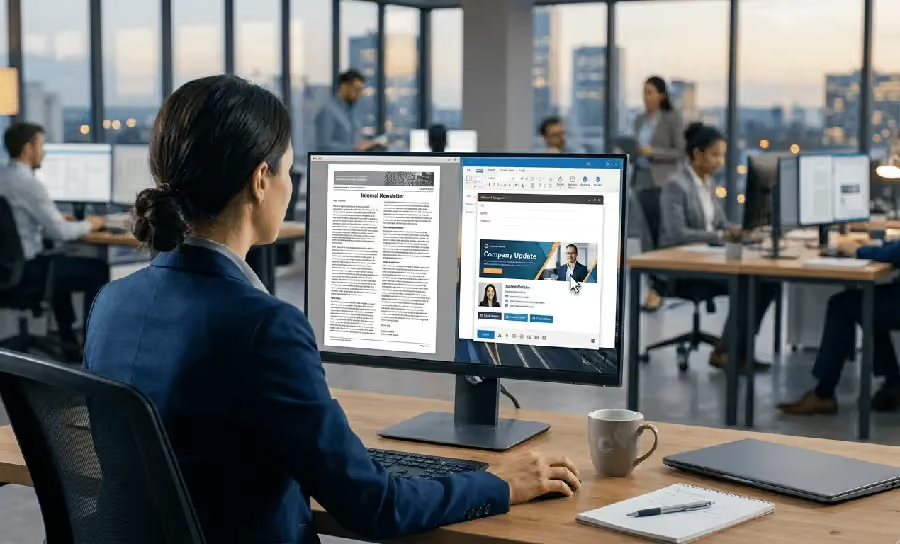
In an era of information overload, the traditional internal newsletter - once the crown jewel of corporate communications - is facing a crisis of engagement. For large-scale branded companies, the challenge is no longer just about distributing information; it is about ensuring that information is actually consumed. As inboxes become battlegrounds for attention, a more subtle yet powerful tool has emerged right in the middle of everyday communication—the personal email signature—quietly delivering consistent, high-frequency visibility where it matters most.
Rather than relying on a monthly or weekly digest that often goes unread, forward-thinking organizations are leveraging the thousands of daily one-to-one emails sent by employees to deliver micro-communications. Here is why and how the perfect email signatures are systematically replacing the internal newsletter.
The Decline of the "Mega-Newsletter"

For years, the corporate newsletter was the primary vehicle for internal updates. However, studies show that while internal email open rates can hover around 64%, the actual "attention rate"—the time spent reading the content—is often abysmal. Employees are increasingly prone to "scroll fatigue," where long-form updates are skimmed or ignored entirely.
The shift toward email signatures is driven by the realization that internal communication is most effective when it is frictionless. By embedding updates into the flow of existing conversations, companies avoid the "extra step" required to open and read a separate newsletter. This method transforms every internal interaction into a touchpoint for company culture, training, or news.
1. High-Frequency Exposure vs. Periodic Bursts
The most significant advantage of using email signatures for internal communications is frequency. A company with 1,000 employees might generate over 500,000 internal emails per month. Each of these is a missed opportunity if the footer is blank.
While a newsletter provides a burst of information once a month, an email signature provides constant, low-stakes reinforcement. This is crucial for strengthening your visual identity across all departments. When an employee sees a banner for an upcoming town hall or a new HR policy 20 times a day in their colleagues' signatures, the message is far more likely to stick than if it appeared once in a 2,000-word PDF.
2. Eliminating Email Fatigue
Digital wellness is a growing priority for major brands. Flooding employees with "All-Staff" emails and bulky newsletters contributes to burnout. By moving non-critical updates to the email signature, you reduce the volume of "FYI" emails hitting the inbox.
Strategic communicators now use signatures to house "always-on" information. For instance, instead of a separate email about a new branding guide, a simple banner in the signature directing staff to professional branding resources ensures the information is accessible exactly when an employee is already in their inbox and thinking about communication.
3. Hyper-Targeting and Segmentation
One of the greatest flaws of the traditional newsletter is its "one-size-fits-all" nature. A global company based in London might send a newsletter that is 40% irrelevant to its Singapore office. Email signatures allow for effortless segmentation.
Using centralized management, companies can display different banners based on the sender’s department or location. The sales team might see a signature banner highlighting new product talking points, while the engineering team sees a link to the latest security protocols. This level of audience-specific personalization ensures that internal "ads" are always relevant to the viewer, drastically increasing click-through rates (CTR).
4. Measurable Engagement Data
Newsletters provide basic open rates, but they rarely tell you which specific update caught an employee’s eye. Digital signatures, however, function like miniature ad campaigns. By using trackable links, internal comms teams can see exactly how many people clicked on a banner for the "Annual Employee Survey" or the "New CEO Podcast."
Pro Tip: Treat your internal signature space like a "sprint" campaign. Change the banner every 7 to 14 days to keep the content fresh. If a banner’s click-through rate drops, it’s a clear signal that the message has been "seen" enough and it’s time to rotate to a new internal priority.
The Power of Micro-Learning
In the modern workplace, learning and development (L&D) must be continuous. Signatures are the perfect vehicle for "micro-learning." Instead of a quarterly training newsletter, why not include a "Tip of the Week" in every internal email signature?
For example, a company looking to improve its digital footprint might include links to social media engagement tips or quick guides on using the company’s new CRM. This drip-feed approach to information is far more effective for long-term retention than an annual training seminar or a dense monthly digest.
A Comparative Look: Newsletter vs. Signature
To visualize the impact, consider the following comparison based on average corporate engagement metrics:
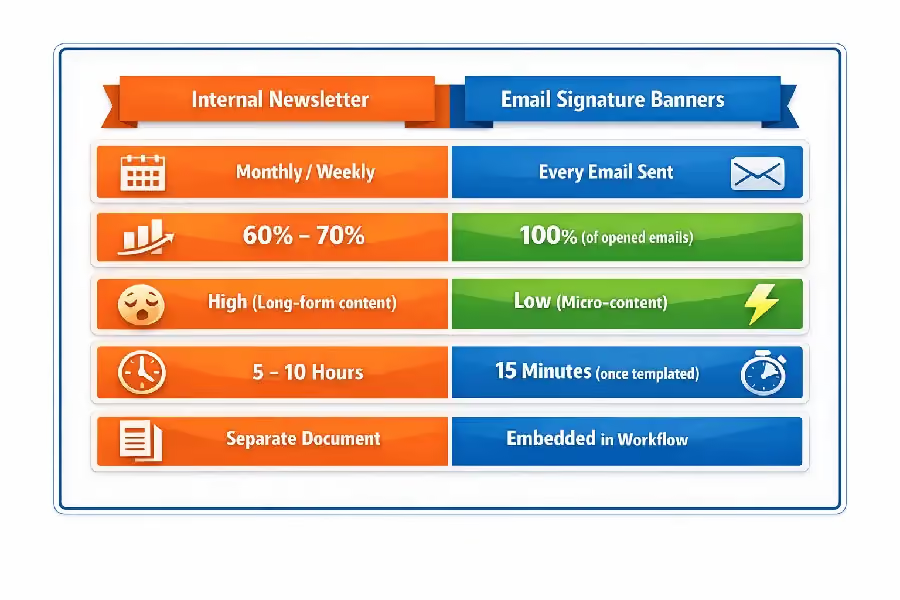
As the data suggests, signatures provide a "passive" way to consume information that feels like a natural part of the workday rather than a chore.
Driving Traffic to Internal Hubs
A common concern is that signatures don't have enough space for "big" stories. The reality is that signatures shouldn't replace the content itself, but rather the delivery of it.
Instead of putting the whole story in a newsletter, use a compelling CTA in the signature to drive traffic to your Intranet or SharePoint. This ensures your internal portal becomes the "single source of truth." For instance, a banner about a new office opening can link directly to a blog post about company growth, keeping the email itself clean and focused on the task at hand.
Maintaining Brand Integrity Internally
For "big branded" companies, internal brand consistency is just as important as external perception. If your employees see disorganized, poorly formatted signatures in their daily internal chats, it erodes the brand’s professional image from the inside out.
Standardizing signatures across the enterprise ensures that every department—from HR to Finance—is aligned. It reinforces the idea that the company is a single, cohesive unit. Ensuring everyone follows the same design best practices turns every internal email into a small but powerful reinforcement of the corporate identity.
5. Compliance and Legal Safeguards
Internal newsletters are often too informal to handle serious legal updates. However, signatures are the ideal place for legal and confidentiality disclaimers. By automating these footers, companies ensure that every internal communication remains compliant with GDPR, HIPAA, or other industry-specific regulations without requiring the employee to remember to add them manually.
The Transition Strategy
Moving from a newsletter-centric model to a signature-first model doesn't happen overnight. It requires a centralized email management solution that allows the Marketing or HR department to update banners for thousands of employees simultaneously.
- Audit Your Content: Look at your last three newsletters. What were the most clicked links? These are your first signature banner candidates.
- Establish a Hierarchy: Reserve the "top" of the signature for the most critical company-wide news and the "bottom" for department-specific links.
- Rotate Often: To avoid "banner blindness," change your internal graphics frequently.
- Use Strategic Links: Always point back to your core resources, such as your company contact directories or internal news portals.
Adopting The Micro-Communication Strategy
The internal newsletter isn't necessarily dead, but its role has changed. It is no longer the primary engine for news; it is now the "archive." The real-time, high-engagement work of keeping a workforce informed and aligned has shifted to the email signature. By adopting this micro-communication strategy, large brands can cut through the noise, reduce email fatigue, and ensure their most important messages are seen every single day.
At Crossware, we understand that for large enterprises, consistency and ease of management are everything. Our platform allows global organizations to centrally manage, automate, and track internal email signature campaigns, ensuring that your brand message—and your internal news—never gets lost in the inbox.