Anatomy of an Email Signature: Beyond Name and Title
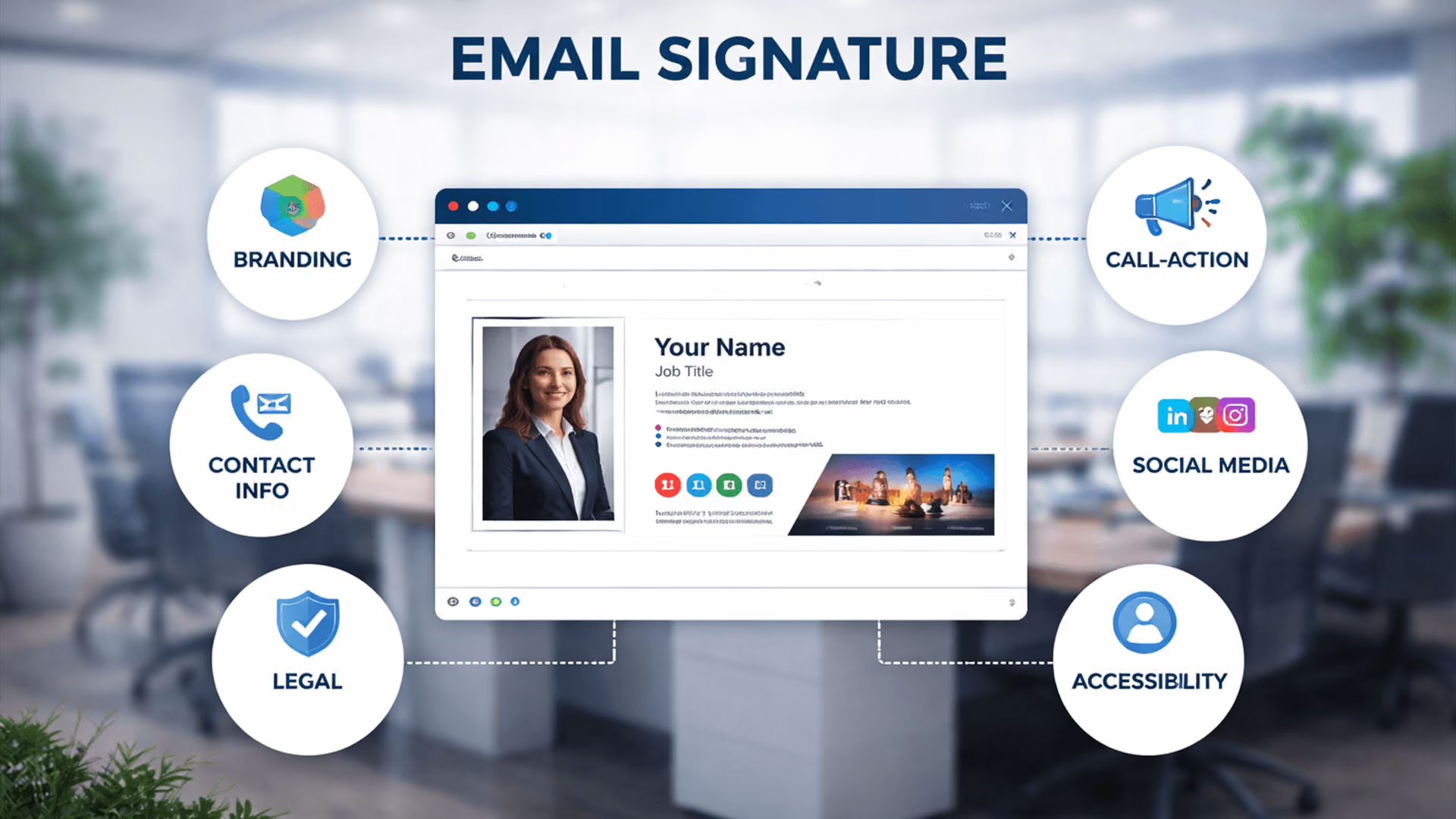
What does your email say about your brand before a single conversation even begins? Imagine a procurement executive at a global enterprise opening two emails with identical proposals. One ends with a clean, consistent, and professionally branded signature that reflects a unified corporate identity. The other trails off with mismatched fonts, missing disclaimers, and outdated contact details. Without realizing it, the first email feels more credible, more trustworthy, and more aligned with a serious organisation.
In today’s hyper-connected corporate landscape, an email is far more than a quick message — it’s a strategic communication touchpoint. For big branded companies, every interaction, right down to the footer of an email, communicates values, professionalism, and brand identity. This is where an email signature moves beyond a simple name and job title, becoming a powerful link in your digital branding and compliance chain. At Crossware, mastering this often-overlooked space helps enterprises influence customer trust levels and elevate the way they communicate with clients, partners, and internal teams alike.
What an Email Signature Really Includes
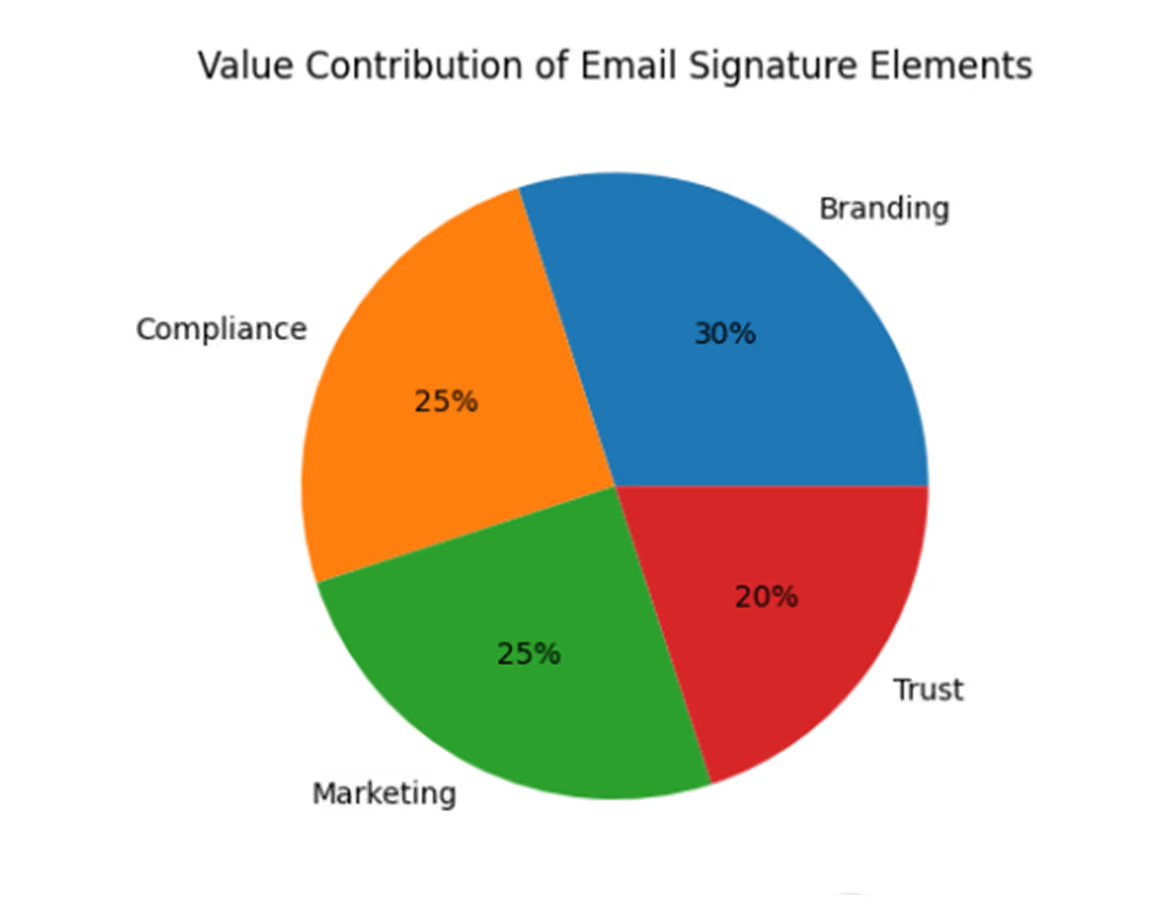
For many organisations, email signatures conjure the basics: name, position, phone number. But modern enterprise signatures are richer, more dynamic, and far more functional.
Here’s a breakdown of common elements found in advanced business email signatures:
This table illustrates how a signature evolves from informational to strategic. Each added component serves a purpose — whether branding, compliance, or engagement.
Branding Power at the Footer
A signature is a visual ambassador of your brand. According to industry insights, well-crafted email signatures unlock hidden branding power and enhance communication effectiveness across all audiences. For large brands sending thousands of emails daily across teams, this consistency reinforces recognition — every message becomes a branded touchpoint.
Consider two large companies: one with a standardized signature across departments, and another letting individuals decide their formats. The former will project stronger, more cohesive brand authority — a subtle but persistent advantage in trust and professionalism.
Psychological Impact of Signature Design

Research into visual communication shows humans make quick judgments based on familiarity and visual consistency. In client inboxes, the first perception of an email hinges not just on the subject line, but how credible and authoritative the signature appears. Understanding the psychology behind effective email signatures reveals that elements such as clean layout, consistent branding, and clear hierarchy deeply influence this perception.
A signature that matches the broader brand aesthetic — fonts, colors, and structure — helps recipients process information faster and respond with confidence. Poorly structured or inconsistent signatures, by contrast, can carry subtle cues of unprofessionalism.
Marketing and Engagement Opportunities
Email signatures aren’t just passive information blocks — they serve as mini marketing engines. Leveraging design and placement tactics, companies can embed clickable banners promoting events, campaigns, and product launches.
For enterprise marketers, even simple elements like social media icons or a “Download Report” button can increase traffic and conversions without disrupting core communication. A Crossware blog highlights how strategic signatures boost employee advocacy and visibility, transforming everyday correspondence into brand reinforcement opportunities.
Another industry perspective underscores how email signatures can augment marketing efforts by defining aesthetic and message consistency.
Compliance, Legal & Regulatory Needs
For heavily regulated industries — legal, healthcare, financial services — compliance is non-negotiable. Your email signature must incorporate appropriate disclaimers, privacy notices, and disclosures to meet legal requirements for email compliance corresponding to jurisdictional or sector requirements.
Here’s how signature compliance layers might vary by industry:
This tailored approach ensures you’re not only informative but also legally sound.
Dynamic Signatures at Scale
Enterprise email environments demand flexibility. Unlike static personal signatures, large brands require dynamic signatures that adapt to context — internal vs external, campaign periods, departmental messaging, region-specific branding, and more.
Solutions like Crossware’s Microsoft 365 integrated tool allow for scaling signature automation without chaos, enabling centralized management of signature design and deployment across the organisation from a single dashboard — eliminating inconsistencies and reducing administrative friction.
Rule-based signatures mean you can automate different content blocks based on audience, sentiment, or timeline — turning one technical feature into a strategic advantage.
Pro Tips: Best Practices for Enterprise Email Signatures
- Standardize but personalize – Create templates that preserve brand consistency but allow relevant personal information like pronouns or regional contact details.
- Keep it accessible – Use alt text for images and ensure all links are accessible to screen-readers.
- Think mobile first – Many recipients open emails on phones — prioritize responsive design.
- Use CTAs sparingly – Focus on aligned goals like event sign-ups or content downloads.
Avoid these common pitfalls:
- Too much clutter — keep essentials readable
- Ignoring legal compliance — costly oversights
- Manual editing — leads to inconsistency and error
ROI: Measuring Impact
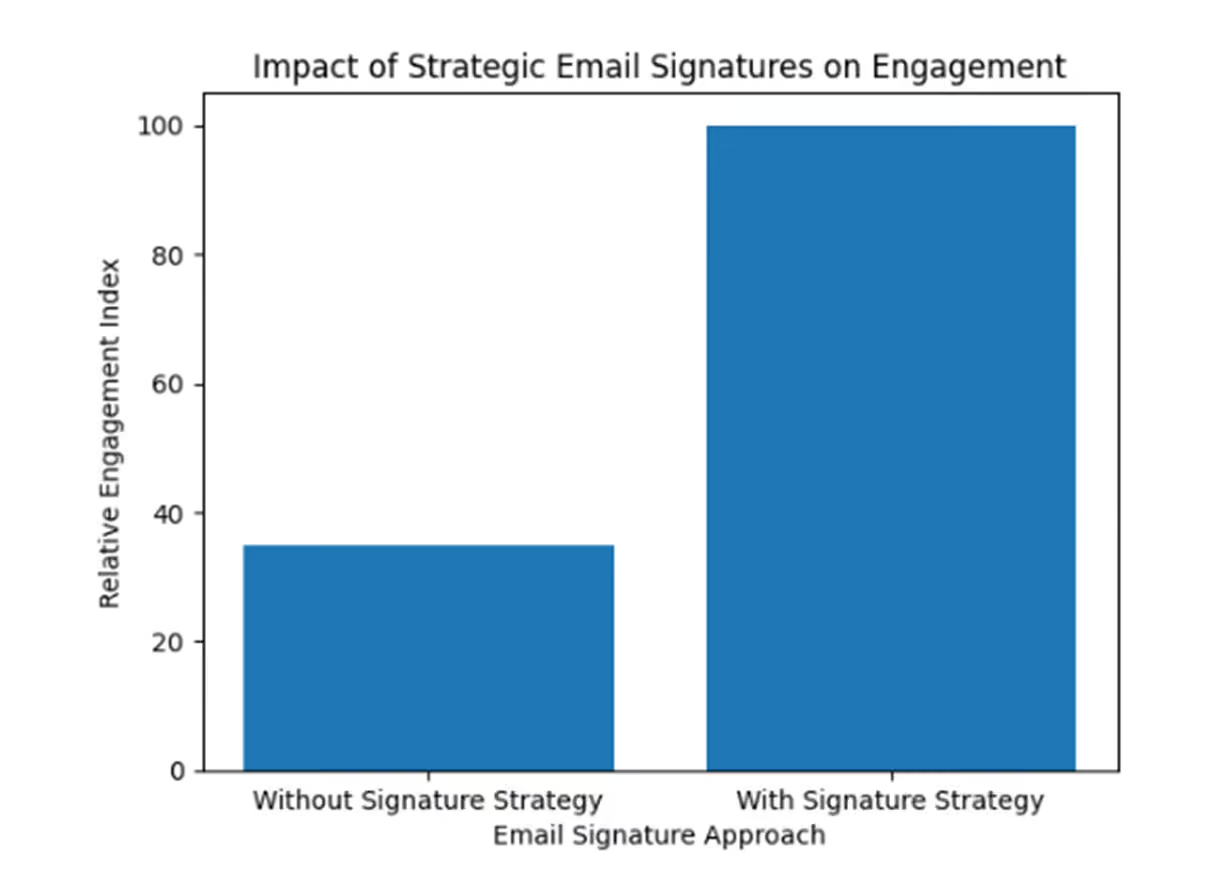
While email signatures might seem small, they create thousands of daily branded impressions across corporate communication channels. A simple analysis might show:
Total daily emails sent per company × Engagement rate on links (estimated) = Monthly interactions driven by signatures
- Emails sent per day (enterprise) = 15,000
- Click-through (CTR) = 3%
- Engagements per day = 450
- Monthly engagements = ~13,500
This mini “graph” highlights the amplification potential: even modest engagement rates translate to significant visibility. By turning the signature line into a marketing asset, companies can realize tangible returns on their communication infrastructure.
Key Takeaways
Email signatures are no longer static footers with a name and title — they’re strategic tools for branding, legal compliance, and marketing. For big branded companies, mastering this medium means investing in intelligent design, centralized management, and dynamic adaptability.
When you leverage the right technology and approach — like those offered by Crossware — every email becomes a consistent, compliant, and impactful asset in your brand communication strategy.