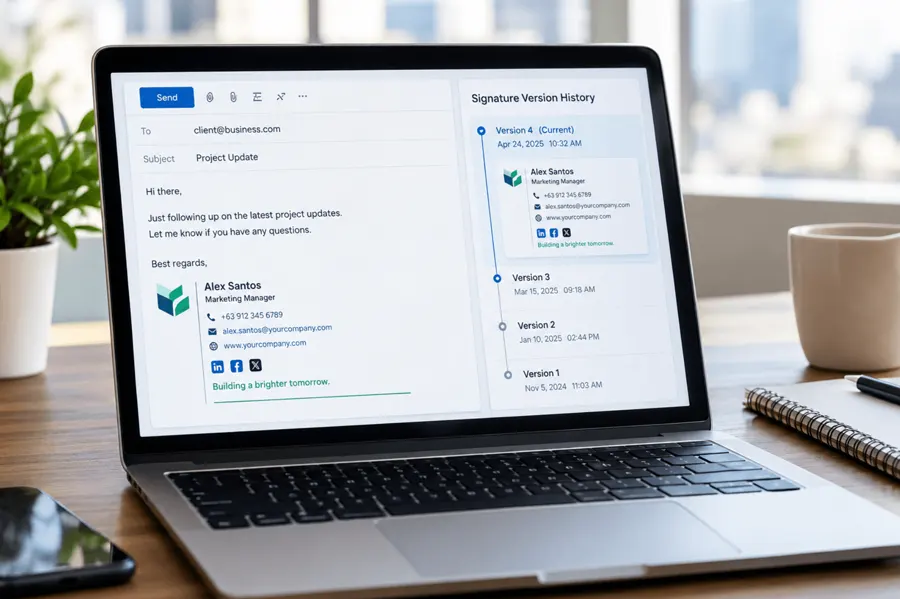
What’s New With Email Signature in 2026?

In the fast-paced digital ecosystem of 2026, the humble email signature has undergone a quiet but radical transformation. No longer just a digital business card or a static block of text at the bottom of a message, the email signature has evolved into an "Intelligent Identity Asset." For large-scale enterprises and global brands, this shift represents a critical frontier in brand consistency, security, and marketing ROI.
As we look at the landscape of corporate communication this year, one thing is clear: if your email signature isn't working as hard as your best employee, it’s time for an upgrade. Here is a comprehensive look at what is new, what is necessary, and what is next for email signatures in 2026.
1. AI-Driven Hyper-Personalization
The "one-size-fits-all" approach is officially dead. In 2026, Artificial Intelligence has permeated the inbox, allowing for signatures that are context-aware. Large enterprises are now deploying dynamic signatures that change based on who is receiving the email.
Imagine a scenario where a sales executive emails a prospect; the signature automatically displays a banner for a "Book a Demo" call-to-action. However, when that same executive emails an existing client, the signature swaps the banner for a "Customer Support Portal" link or a "User Conference Invitation." This level of psychological nuance in professional communication ensures that every interaction is relevant, building deeper trust and engagement without manual effort from the sender.
2. The Security Imperative: Trust is the New Currency

With sophisticated AI-enhanced phishing attacks on the rise, proving your identity is more critical than ever. In 2026, email security is not just an IT problem—it’s a brand reputation issue. We are seeing a mass adoption of strict authentication protocols like DMARC (Domain-based Message Authentication, Reporting, and Conformance) across all major industries.
More importantly, 2026 is the year of BIMI (Brand Indicators for Message Identification). This protocol allows authenticated businesses to display their logo right next to their message in the recipient’s inbox. It serves as a verified "blue checkmark" for email. For big brands, this visual trust signal is essential to ensure high open rates and protect customers from spoofing. Prioritizing email security and information protection is no longer optional; it is the foundation of digital communication.
3. Signatures as a Primary Marketing Channel
Marketing teams have finally unlocked the "owned ad space" that sits in every employee's outbox. Consider this: a company with 5,000 employees sending an average of 40 emails a day generates 200,000 brand impressions daily. In 2026, sophisticated marketers are treating this volume as a high-value performance channel.
Marketing platforms are now tightly integrated with signature management tools, allowing teams to schedule campaigns that align with product launches, webinars, or press releases. These campaigns can be segmented by department—HR promotes recruitment, Sales promotes new features, and Legal promotes sustainability initiatives. By leveraging signatures as a marketing asset, companies are seeing a tangible decrease in cost-per-lead and a significant boost in internal and external awareness.
The Evolution of the Enterprise Signature
To visualize how far we have come, let's compare the standard corporate signature of the past with the enterprise standard of 2026.
4. Centralized Governance for the Hybrid Workforce
For global enterprises, the logistical nightmare of managing signatures for thousands of employees across different time zones and devices has been solved through centralization. In 2026, the "Hybrid Workforce" is the norm, and IT directors demand tools that sync seamlessly with Microsoft 365, Google Workspace, and HCL Domino simultaneously.
The focus this year is on governance at scale. Automated directories ensure that if an employee’s title changes in Active Directory, it updates in their email signature instantly. Furthermore, multinational corporations are using location-based rules to ensure centralized management across remote teams. This ensures that an employee in Berlin automatically has the correct German legal disclaimer and EU registry numbers, while their colleague in California has a completely different set of compliance text—all managed from a single dashboard.
5. Eco-Conscious & Accessible Design
Sustainability is a major boardroom topic in 2026, and it has reached digital design. "Green" email signatures are trending—these are designs optimized to use lightweight HTML code and smaller image files to reduce the data load (and thus the energy consumption) of every email sent.
Simultaneously, accessibility is paramount. With over 40% of users viewing emails in Dark Mode, brands are moving away from full-image signatures that look jarring on dark backgrounds. Instead, they are adopting transparent PNGs and adaptive text colors. This attention to hidden branding power and design aesthetics ensures that the brand looks premium and professional, regardless of the recipient's viewing preferences.
6. Sales Velocity & CRM Integration
For sales organizations, the signature has become a productivity tool. The days of "when are you free?" email tennis are over. Modern signatures feature integrated calendar booking links that sync in real-time with availability.
Furthermore, advanced integration means that every click on a signature element—be it a pricing page link or a case study download—is tracked and pushed directly into the CRM (Salesforce, HubSpot, Dynamics). This gives sales representatives a "intent signal," allowing them to follow up when a prospect is actively engaging with their brand. Adopting these sales best practices transforms the signature from a passive sign-off into an active lead generation engine.
Pro Tips for Enterprise Managers
- Audit Your "Dark" Data: Run a report to see how many legacy, non-compliant signatures are currently circulating in your organization. The number is often higher than expected.
- Segment Your Banners: Don't send the same banner to everyone. Create specific banners for "Internal" emails (reminding staff of benefits or events) versus "External" emails.
- Lock Down the Essentials: Allow employees to personalize their pronouns or headshots, but lock the font, logo, and legal disclaimer to prevent accidental brand dilution.
The Modern Email Signature for 2026
The email signature of 2026 is a sophisticated intersection of technology, branding, and security. For big branded companies, the ability to control this asset centrally while deploying it dynamically offers a competitive edge that goes beyond simple aesthetics. It is about ensuring every single communication that leaves your organization is secure, compliant, and contributing to your bottom line. As we move deeper into this digital-first decade, the question is no longer if you should manage your email signatures, but how intelligently you can do it.
If you are ready to bring your organization's email identity into 2026, Crossware provides the enterprise-grade power you need. As a global leader in email signature management, Crossware empowers the world's largest brands to centralize control, ensure total compliance, and unlock the marketing potential of every email. With seamless integration for Microsoft 365, Microsoft Exchange, and HCL Domino, Crossware is the solution for businesses that refuse to compromise on security or style.