This Subtle Email Signature Detail That Affects Conversions

The truth is, a single "tiny" detail—an inconsistent logo, a broken link, or a non-compliant legal footer—can trigger a subconscious "red flag" for a potential client. In an era where cybersecurity threats are rampant and brand trust is hard-won, that minor inconsistency could be the reason a high-value prospect decides to take their business elsewhere.
Your email signature is more than just a digital sign-off. It is a silent ambassador for your brand, a digital business card, and a frequent touchpoint with your most valuable stakeholders. However, in large-scale corporate environments, these signatures often become a chaotic "wild west" of mismatched fonts, broken image links, and outdated disclaimers.
The Scenario: The $2 Million "Disappearing" Deal
Imagine a Senior Procurement Officer at a global logistics firm. She is reviewing two final bids for a $2 million contract. Both vendors are technically qualified. As she scrolls through her email history with Vendor A, she notices that the Account Executive’s signature features a high-resolution logo and a clean, professional layout. In a follow-up email from Vendor A’s Technical Lead, the signature looks identical—same font, same brand colors, same sleek call-to-action.
Now she looks at Vendor B. The Account Manager has a signature with a blurry, stretched logo. The Technical Lead’s signature has no logo at all and uses a different font entirely. Then, a third email arrives from Vendor B’s Finance Director, whose signature contains an outdated legal disclaimer from three years ago.
Subconsciously, the Procurement Officer begins to wonder: If they can’t manage the consistency of their own brand, how will they manage my $2 million project? She chooses Vendor A.
This isn't just hypothetical. Data suggests that when email signatures influence customer trust, with research indicating that professional, branded signatures can increase trust scores by as much as 24% compared to non-branded or inconsistent ones.
The Strategic Power of Consistency
Why does a mismatched font or a "Sent from my iPhone" tag matter so much? It comes down to Cognitive Fluency. The human brain prefers information that is easy to process. When a brand presents a unified front across every touchpoint, it signals stability and attention to detail.
When you implement consistent branding across all email signatures, you are essentially reinforcing your brand’s authority every time a team member hits "send." Conversely, inconsistency creates "cognitive friction." It forces the recipient to work harder to verify your identity, which subtly erodes the professional "sheen" of your organization.
Quantifying the Silent Brand Killer: The Inconsistency Perception
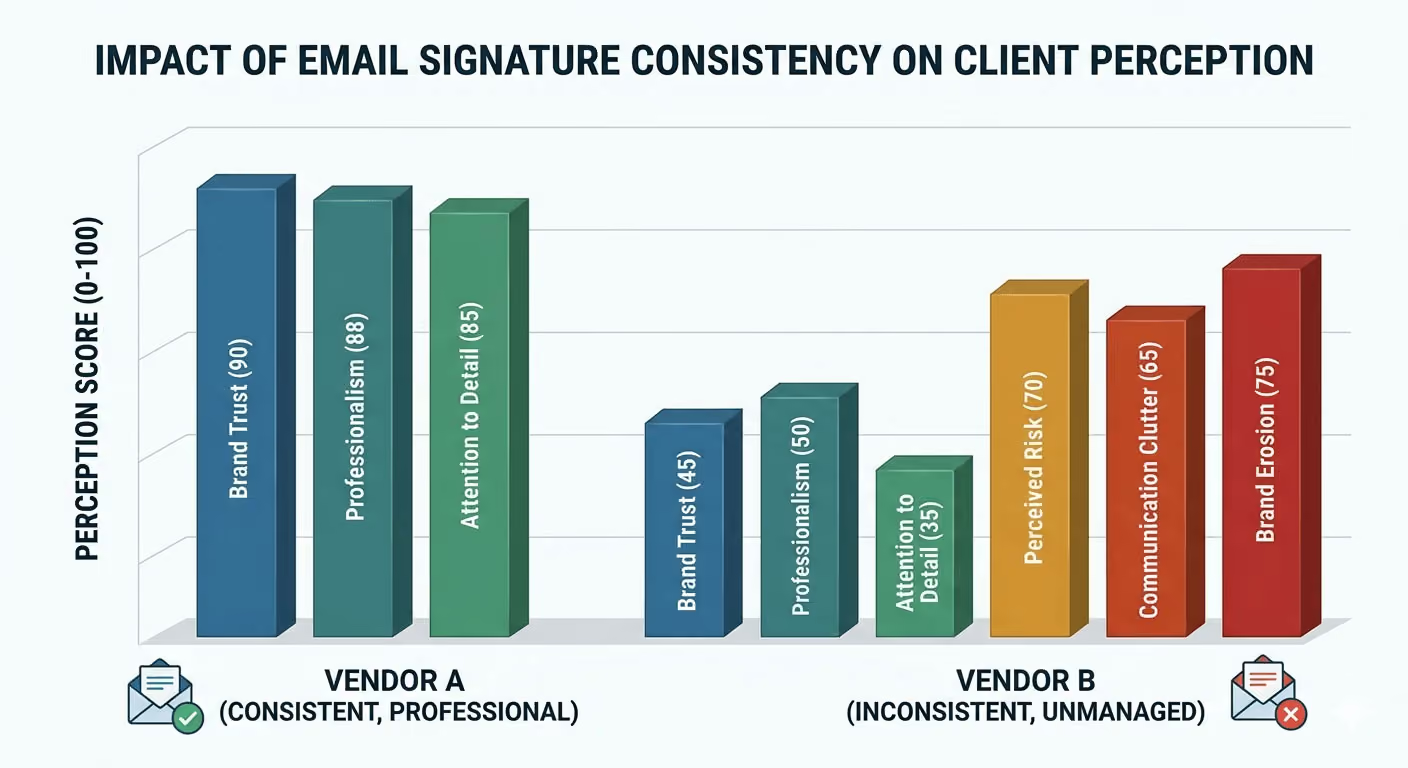
To truly grasp the impact, consider how recipients perceive these different levels of signature professionalism. While often subconscious, these perceptions translate directly into trust and willingness to do business. We’ve synthesized market data and psychological principles into a visualization of this phenomenon. The chart below contrasts two hypothetical scenarios: 'Vendor A' (using consistent, professional signature management) and 'Vendor B' (leaving signatures unmanaged, leading to variations). You will see how trust metrics drop and negative perceptions spike when professionalism is ignored.
Analyzing the Data: How Inconsistency Actively Erodes Value
As the graph illustrates, 'Vendor A' (using consistent, professional signature management) maintains exceptionally high perception scores for vital business drivers: Brand Trust (90), Professionalism (88), and Attention to Detail (85). For a client, this visual consistency signals operational excellence. Conversely, 'Vendor B' (leaving signatures unmanaged, leading to variations) experiences a severe trust penalty. Their Brand Trust score plummets to 45.
The 'tiny details' of mismatched fonts and outdated logos are interpreted as a lack of discipline. The graph clearly shows that ignoring signature management doesn't just result in 'low scores'—it actively spikes negative perceptions, leading to high scores for 'Perceived Risk (70)' and 'Brand Erosion (75)'. In a competitive corporate environment, these negative spikes are precisely what cause high-value prospects to seek safer alternatives, validating that a messy signature is indeed a costly oversight.
Turning the "Footer" into a Marketing Asset
Most corporations view the email signature as a static, "set it and forget it" element. This is a massive missed opportunity. If your company sends 50,000 emails a month, that is 50,000 free ad impressions.
By using dynamic signature content and analytics, marketing teams can turn the signature into a lead-generation tool. Instead of a dead-end block of text, the signature can feature a banner for an upcoming webinar, a link to a new whitepaper, or a "Book a Demo" button.
To maximize the impact, you must also look at the data. Tracking email signature clicks and engagement allows your marketing team to see which calls-to-action are actually resonating with your audience. If a "See Our Latest Case Study" link in your signatures is driving 500 clicks a month, that is high-intent traffic you didn’t have to pay for via PPC.
The Scale Challenge: Why Manual Management Fails
For a company with 500+ employees, managing signatures manually is impossible. Even with the best intentions, you will end up with "brand drift." Employees will add their own favorite quotes, use old logos from three years ago, or change their font to "something they like better."
As organizations grow, scaling email communications requires centralized control. When the IT or Marketing department can update every signature in the company with a single click, the risk of "the tiny detail" costing a client vanishes.
Centralization ensures that:
- The Logo is Always Right: No more stretched, blurry, or old versions.
- The Info is Always Current: Title changes and new phone numbers are updated instantly.
- The Marketing is On-Point: Banners are rotated based on the current campaign.
- The Legal is Protected: Disclaimers are enforced automatically based on the sender’s location.
The Hidden ROI of the Perfect Signature
While it’s hard to put an exact price on a "lost feeling of trust," the ROI of professional signature management is clear. It saves IT hours of manual troubleshooting, empowers marketing to reach a captive audience, and protects the legal department from compliance breaches.
More importantly, it ensures that every time a client interacts with your brand, they see a reflection of the high standards you claim to uphold. When every "tiny detail" is polished, it sends a powerful message: We are professional, we are consistent, and we are ready for your business.
At Crossware, we understand that for large corporations, consistency is the foundation of trust. Our centralized email signature management platform allows you to take full control of your brand’s digital handshake, ensuring every email sent across your entire organization is professional, compliant, and optimized for engagement.